Art
What Else Can This Become? The Expanding Worlds of Juju
Blending expressionist painting with augmented reality, Juju is creating immersive experiences that challenge how African stories are seen, remembered and shared. His work exists between tradition, technology and discovery.
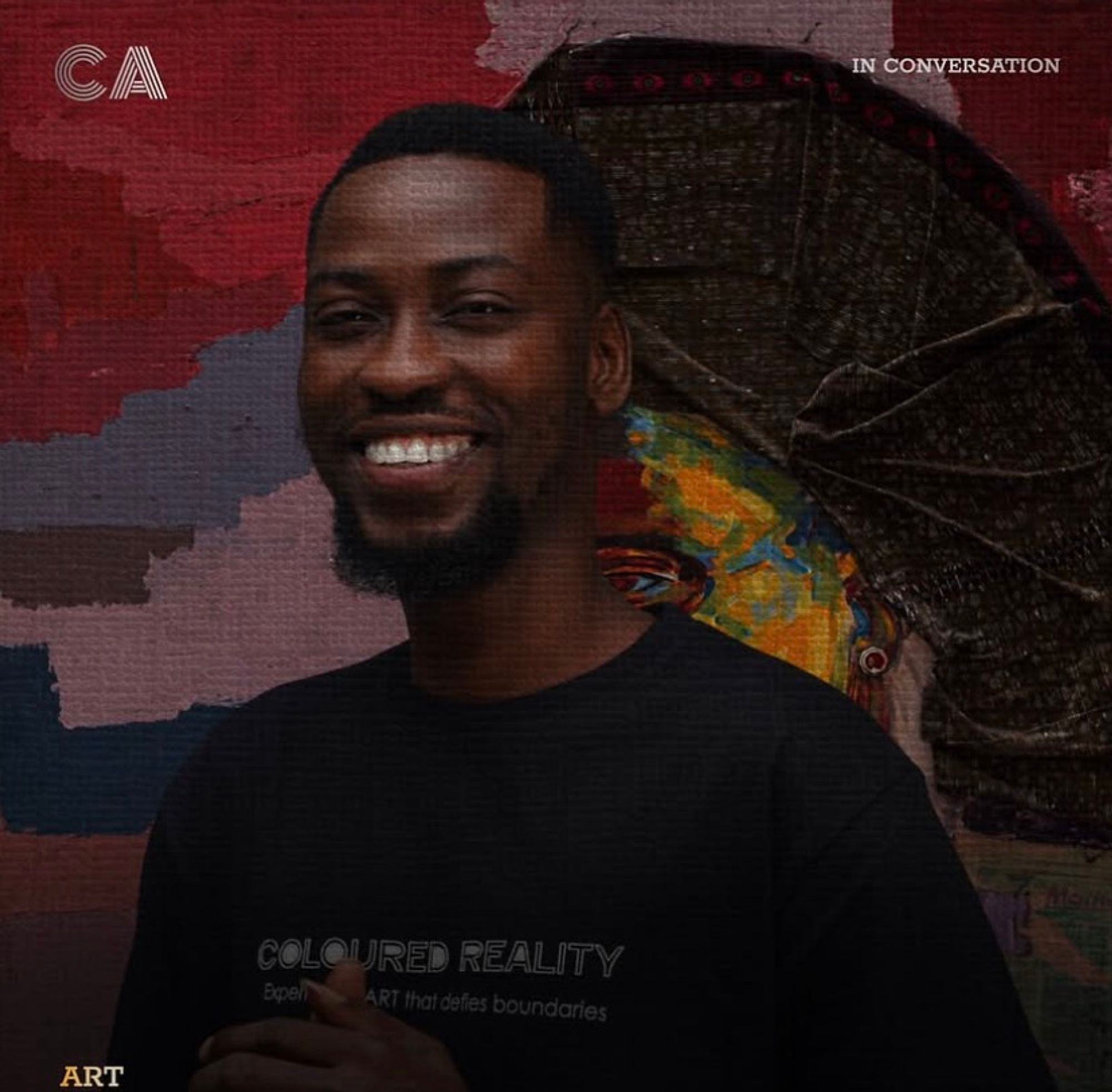
For Juju, a painting is rarely the end of the conversation.
Long before augmented reality became part of his creative practice, his work was already rooted in curiosity. The cartoons, films, comic books, conversations and everyday experiences that surrounded him growing up in Nigeria became the foundation of how he understood storytelling. Today, that same curiosity continues to inform a practice that moves between traditional painting and emerging technology.
"I consider myself a visual artist who is curious about how identity, culture, emotion and technology interact," he says.
At the centre of that practice is expressionist painting. Yet Juju's ambition has always extended beyond the canvas itself. Rather than creating artworks that present a complete answer, he is interested in building experiences that invite further exploration.
"What I am trying to create is a world where a painting is not necessarily the end of the conversation.
"That philosophy eventually led him towards augmented reality.
His first encounter with AR came around 2018 and 2019. Initially interested in the technology from a business perspective, the pandemic created space for experimentation and deeper learning. As his understanding of the medium grew, a simple but transformative question emerged.
"What if I don't use this only for business? What if I bring it into my art?
"The answer would reshape the direction of his practice.
For Juju, the challenge was never about replacing traditional painting. It was about expanding its possibilities. While a painting can communicate through colour, composition, texture and mood, he became interested in the stories that existed beyond the limits of a static image.
Through augmented reality, those stories could continue unfolding.
"I began to realise the potential when I imagined someone standing before a painting and suddenly hearing a sound or seeing movement connected to the story.
"That idea now sits at the heart of his work.
One of the clearest examples can be found in Identity, a piece that explores cultural heritage through portraiture, colour and symbolism. At first glance, the physical painting communicates its own narrative. But through augmented reality, tribal markings animate, sound emerges and another layer of meaning begins to reveal itself.
The viewer is no longer simply looking at a painting.
The viewer becomes part of an experience.
"I want people to feel curious first," he explains. "I don't want someone to look at my work and immediately feel that they have understood everything.
"Curiosity is perhaps the defining word of Juju's practice.
Where traditional exhibitions often ask viewers to observe, his work encourages participation. Every painting contains the possibility of discovery, inviting audiences to look closer and remain open to what might emerge.
Importantly, technology remains secondary to the story itself.
For Juju, the success of a work is never determined by its technological sophistication. The painting must stand on its own before any digital layer is introduced.
"If you remove the AR from one of my works, I still want there to be something worth looking at.
"That perspective allows him to navigate a balance that many artists struggle to achieve. Rather than seeing technology and tradition as opposing forces, he sees them as collaborators.
His connection to African culture remains central to that approach.
"I am not using technology because I want to abandon tradition. In many ways, I am using technology because I want to find new ways of carrying some of those traditions and stories forward.
"One pivotal moment in that journey came through Colored Reality, the first body of work where painting and augmented reality fully converged. The project gave him the confidence to embrace both sides of his creative identity without feeling compelled to choose between them.
"It taught me that I didn't have to decide between learning about technology and painting. I could be both.”
The experience also reinforced an important lesson about artistic growth: experimentation requires uncertainty. Not every answer arrives immediately. Sometimes progress comes through trial, failure and persistence.
As technology continues to influence how audiences experience art, Juju remains focused on something deeper than novelty.
His interest lies in cultural memory.
Future projects will continue exploring African identity, tradition, legacy and storytelling, while seeking new ways to connect physical artworks with music, archives, oral histories and immersive experiences."I see technology as a door rather than a destination.
"That distinction feels important.
While new tools continue to emerge, Juju's questions remain remarkably consistent. How can stories be preserved? How can culture be experienced differently? What possibilities become available when new technologies meet centuries of tradition?
Ultimately, those are the questions he hopes audiences leave with.
"I think my work has accomplished something significant if someone leaves it with a new perspective on an aspect of African culture.
"And perhaps more importantly, with one final thought:
"What else is possible?"For Juju, that question is not simply an ending.
It is the beginning of every work he creates.
JOIN THE CULTURE LIST
Stay Close To The Culture.
Stories, editorials, playlists, Culture 50 updates and the conversations shaping culture across Africa, the UK and the diaspora.