For decades, flying cars have belonged to the realm of science fiction.
They have appeared in films, comic books and futuristic concept sketches, promising a future where roads are no longer the only path from one destination to another. While the idea has long captured the public imagination, few companies have attempted to bring it to life in a way that feels tangible.
Tesla believes that moment may finally be approaching.
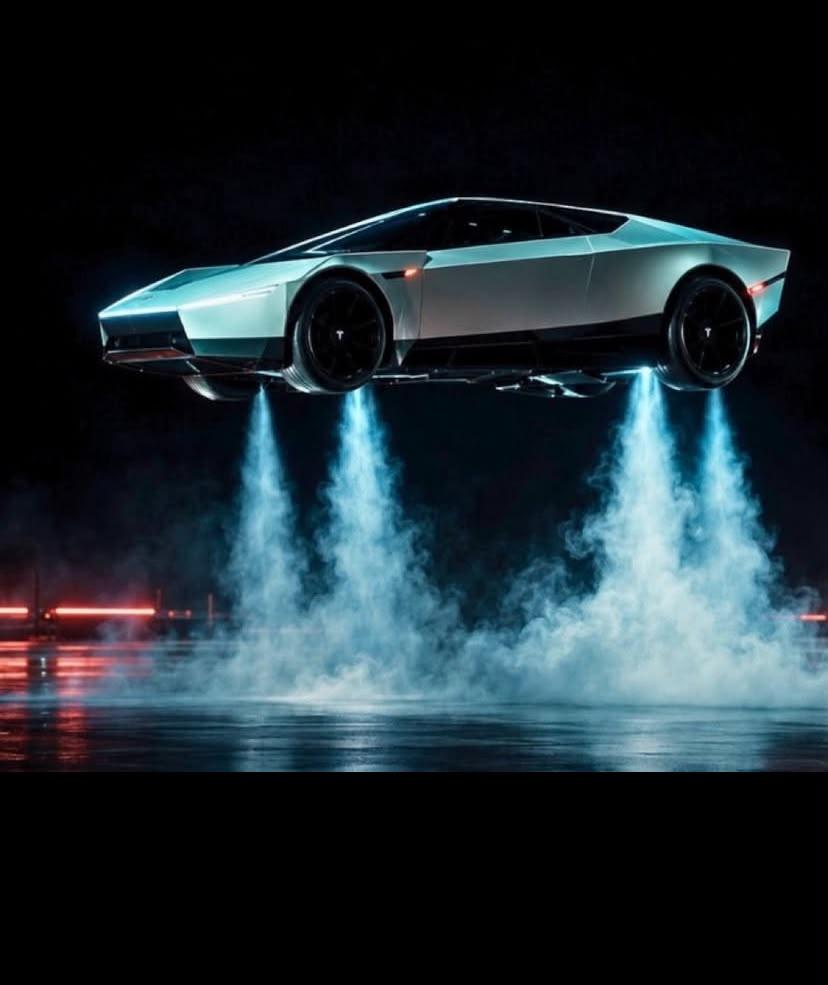
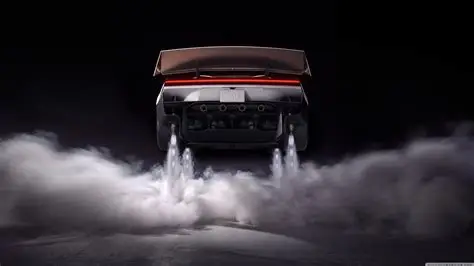
During a launch event in Texas, the company unveiled a new version of its long-awaited Roadster, demonstrating capabilities that move far beyond the traditional expectations of a sports car. Developed through a collaboration between Tesla and SpaceX engineers, the vehicle uses high-pressure air tanks and cold-gas thrusters designed to provide bursts of acceleration, directional movement and, most notably, limited flight capability.
The demonstration immediately became one of the most talked-about moments in automotive technology this year.
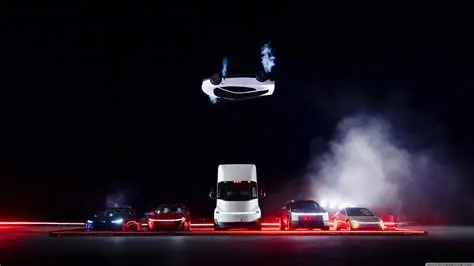
Footage released by Tesla showed the Roadster driving up an inverted ramp, launching into the air and rotating before landing back on its wheels. Additional demonstrations showed the vehicle becoming airborne through the use of its thruster system, leading CEO Elon Musk to declare that “flying cars are real.”
Whether the vehicle ultimately becomes a practical means of transportation remains an open question.
What Tesla has presented is not a conventional flying car in the popular sense. Rather than functioning as an aircraft capable of sustained flight over long distances, the Roadster uses a combination of compressed-air propulsion, suction systems and aerospace-inspired engineering to create short bursts of aerial movement. The concept exists somewhere between a high-performance sports car and a technological experiment designed to push the limits of what a road vehicle can do.
Beyond the flight demonstrations, Tesla's performance claims are equally ambitious.
The company says the vehicle could accelerate from 0 to 60 miles per hour in less than a second, making it one of the quickest production vehicles ever conceived. Tesla has also suggested a top speed exceeding 230 miles per hour while incorporating technologies derived from SpaceX's aerospace research.
The design itself reflects that ambition.
Low, angular and aggressively futuristic, the Roadster carries an aesthetic that feels more aerospace than automotive. Scissor doors, aerodynamic surfacing and integrated flight hardware give the vehicle a presence unlike any previous Tesla model. Inside, the cabin remains characteristically minimalist, reinforcing the company's long-standing preference for technology-driven design.
Yet for all the excitement surrounding the reveal, significant questions remain.
Regulatory approval, safety standards and legal restrictions will ultimately determine how much of the Roadster's aerial capability can be realised beyond controlled demonstrations. Industry observers have pointed out that while the engineering appears impressive, existing transportation and aviation frameworks have not been designed around vehicles that occupy both categories simultaneously.
That reality may prove just as important as the technology itself.
The history of transportation is filled with ambitious concepts that arrived before the infrastructure required to support them. Flying vehicles have consistently encountered challenges involving safety, regulation and practicality, obstacles that have prevented many previous concepts from reaching widespread adoption.
“The most important question is no longer whether a flying car can be built. It is whether society is ready for one.”
For Tesla, however, the Roadster represents more than a product.
It is a statement about possibility.
The vehicle challenges assumptions about what a car can be, blurring the boundaries between automotive engineering, aerospace technology and speculative design. Even if its most ambitious capabilities remain years away from everyday reality, the project signals an industry increasingly willing to experiment with ideas that once seemed impossible.
Production of the Roadster is expected to begin in 2028, according to Tesla, though questions surrounding regulation, legality and real-world implementation remain unresolved.
For now, the concept offers a glimpse into a future that feels simultaneously familiar and extraordinary.
Whether that future ultimately takes flight remains to be seen.